On This Page
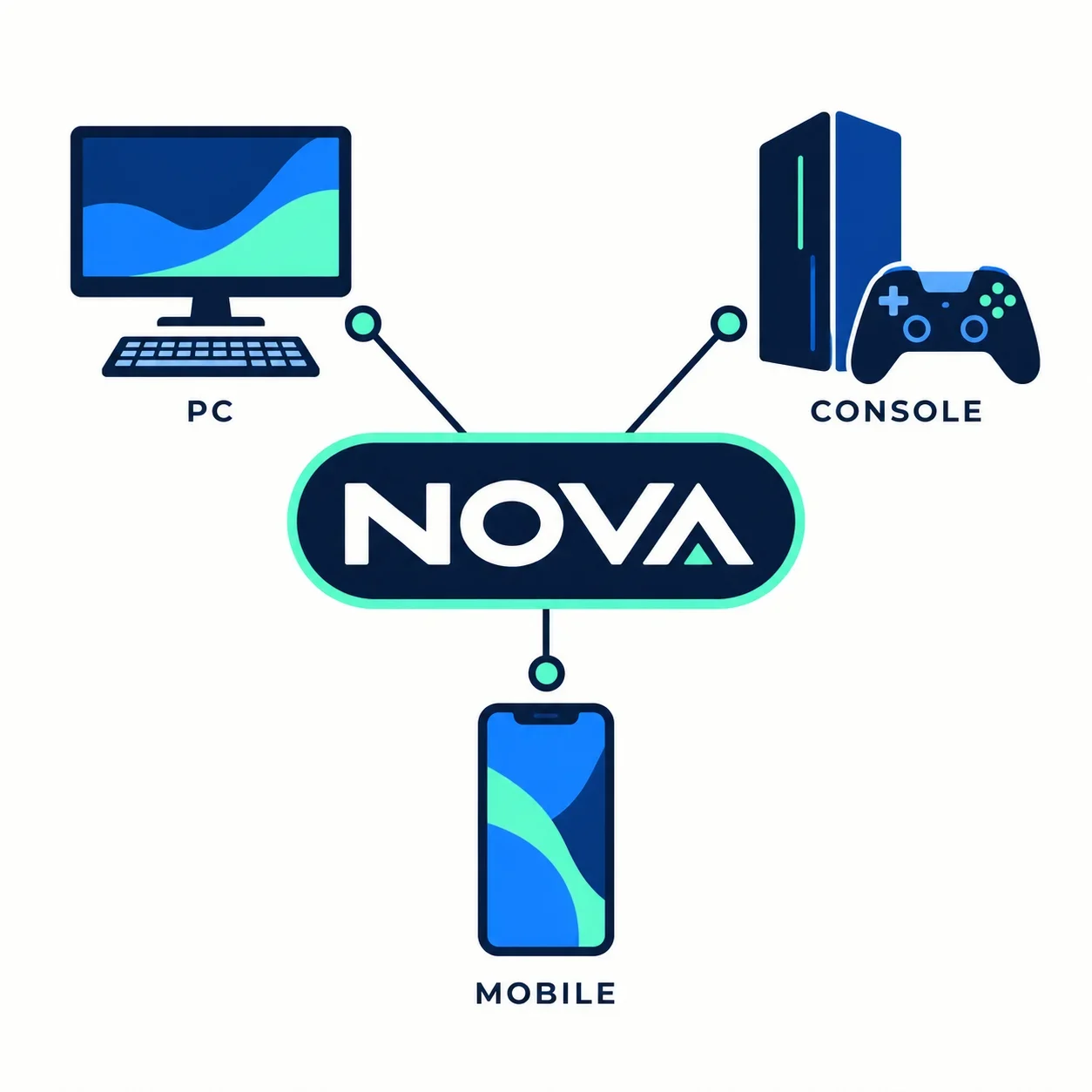
The interactive generator is built for players who want one core identity instead of a new name for every launcher, console, and phone game. It uses style and platform presets plus length guidance so candidates can move from a PC lobby to a console party chat to a mobile leaderboard without feeling out of place. The tool is a starting point, not an availability checker: it can produce a shortlist, but the player still needs to verify the name on each platform. Use it to explore different tone directions, save favorites for comparison, and test the finalists out loud before committing.
Understanding the Cross-Platform Gamer Name Generator
The cross-platform gamer name generator is built around a simple goal: a player should be able to carry a recognizable identity from a PC launcher to a console party to a mobile game without starting over. The tool starts with a plain core name and lets the player use style presets and platform presets to explore directions that fit different contexts. A gamertag identifies the player on a platform, while a character name belongs to a specific game or realm; keeping those layers distinct helps prevent a single-game label from dominating an identity that needs to travel.
The controls are there to reduce the blank-page problem, not to make decisions for the player. Style presets can tailor outputs to a preferred tone, and platform presets can shape results for general use or for services such as Epic Games and Steam. Length guidance helps the player keep the name legible in compact interface spaces, and a read-aloud test catches candidates that are awkward in voice chat. Browser-based generators can run entirely in the browser using curated word lists, with no server-side name storage or live availability checks; that makes generation fast and private, but it also means the output is a candidate list rather than a reservation.
The best use of the tool is iterative. Generate a shortlist, save favorites in local storage, read the names aloud, and test the plain core against the display options each platform currently supports. A neutral name can follow a player across genres, while a name tied to one game or meme can become dated. The generator can produce examples such as ShadowViper, FrostRonin, NeonPulse, CobaltWraith, and SilentTalon, but the final choice should still sound like the player and remain usable when voice-chat teammates abbreviate it.
Procedural Syntax & Formatting Constraints for Cross-Platform Names
Cross-platform naming starts by separating the core name from game-specific character names. The core name should be plain, pronounceable, and easy to type: letters and, when necessary, deliberate digits. The exact character limits, allowed symbols, and casing rules should be confirmed in each platform’s official account settings or support pages, because no generic generator can guarantee that a candidate will be accepted everywhere. A practical design target is about 6 to 14 characters: long enough to be distinctive, short enough to stay readable on scoreboards, and compact enough for friend lists. That is a naming guideline, not a platform rule.
The safest formatting checklist is short. Avoid lookalike substitutions that make a name hard to find or easy to impersonate, such as mixing capital I with lowercase l or zero with O. Test the name in party chat, because a name that is awkward to say will usually get clipped or swapped for a nickname. Decide whether the name needs to fit a scoreboard, a friend list, and a login screen, since those contexts reward different lengths. If you use stylized characters, treat them as optional decoration and keep a plain version as the core identity. Availability is the other constraint: a browser-only generator may not check whether a name is already taken, so users should verify on each platform. Check official account settings before treating a name as permanent.
Contextual Heuristics & Lexicons for Gamertag Styles
Style in a gamertag comes from the images and sounds a player chooses, not from a fixed list that works the same way for every genre. Examples such as ShadowViper, FrostRonin, NeonPulse, CobaltWraith, and SilentTalon show a useful pattern: a concrete image or creature paired with a sharp modifier. That pattern can read as dark, technical, or quiet depending on the words, but the generator should not pretend that a single style label guarantees a specific genre fit. A player who wants a tactical-shooter name may prefer a short, low-syllable shape; a fantasy player may accept more mythic language; a streamer may want a name that is easy to say and spell on a thumbnail. These are heuristics, not rules.
When using a style preset, treat the output as a direction rather than a verdict. The preset can help a player explore a tone, but the final name still needs to pass the same checks: Is it pronounceable over voice chat? Is it easy to type? Does it avoid lookalike characters? Does it still work if a teammate shortens it? Deliberate numbers can help when they read as intentional, such as 77 or 404, while random strings like 4821 tend to read as auto-generated. Privacy matters too: avoid embedding a real name, birth year, or hometown, especially when streaming or playing with strangers. A neutral name can travel across genres, while a name tied to one game or meme can become dated.
Comparative Analytics: Generator vs. Manual Ideation
Generator and manual ideation solve different problems. A generator is fast and broad: it can combine curated word lists into multiple candidates, apply style and platform presets, and let a player save favorites in local storage for comparison. Manual ideation is slower but can be more personal, because the player controls the meaning, the inside joke, and the private reference. Neither method guarantees availability. A browser-only generator may not perform live availability checks, and a manually invented name can still be taken on the platform that matters most.
| Criterion | Generator | Manual Ideation |
|---|---|---|
| Uniqueness | Can produce many combinations from word lists; may still repeat familiar patterns | Can be highly original when built from personal references |
| Availability | No live check in a browser-only tool; user must verify on each platform | Not guaranteed; user must verify on each platform |
| Speed | Fast; produces a shortlist quickly | Slower; depends on brainstorming and revision |
| Suitability | Good for style exploration and platform presets | Strong for personal meaning and private references |
| Recall and consistency | Useful for saving a repeatable core name; no supplied evidence proves higher recall | Memorable when the reference is meaningful to the player |
| Best use | First-pass ideation, style filtering, and comparison | Final polish, personal meaning, and identity checks |
The strongest workflow combines both: use the generator to explore styles and save a shortlist, then manually test the finalists for pronunciation, spelling, and personal fit. The generator is not a replacement for platform verification. It is a way to reduce the blank-page problem and produce a consistent core name that can be adapted with display-layer variants. Claims that generated names are inherently more memorable should be treated with caution; memorability depends on sound, repetition, and context, not on the method of ideation alone.
Frequently Asked Questions for FAQ Schema
Does the generator check whether a name is available?
No. A browser-based generator can run without server-side name storage or live availability checks, so the output is a candidate list, not a reservation. Verify the name in each platform’s official account settings before committing.
How long should a cross-platform gamer name be?
A practical target is about 6 to 14 characters: long enough to be distinctive, short enough to read on a scoreboard, and easy to say in voice chat. This is a design guideline, not a platform rule, so check each service’s current limits.
Do numbers or symbols make a name more unique?
Deliberate numbers such as 77 or 404 can read as intentional, while random strings like 4821 often look like a default name. Symbols and stylized characters should be checked against each platform’s current rules, and the core name should stay plain and easy to type.
Can the same name be used across PC, console, and mobile?
The same core name can often be adapted across platforms, but availability is not guaranteed. Use a plain alphanumeric core, prepare a few pronunciation-friendly variants, and check each platform’s current rules before treating the name as your long-term identity.