Table of Contents
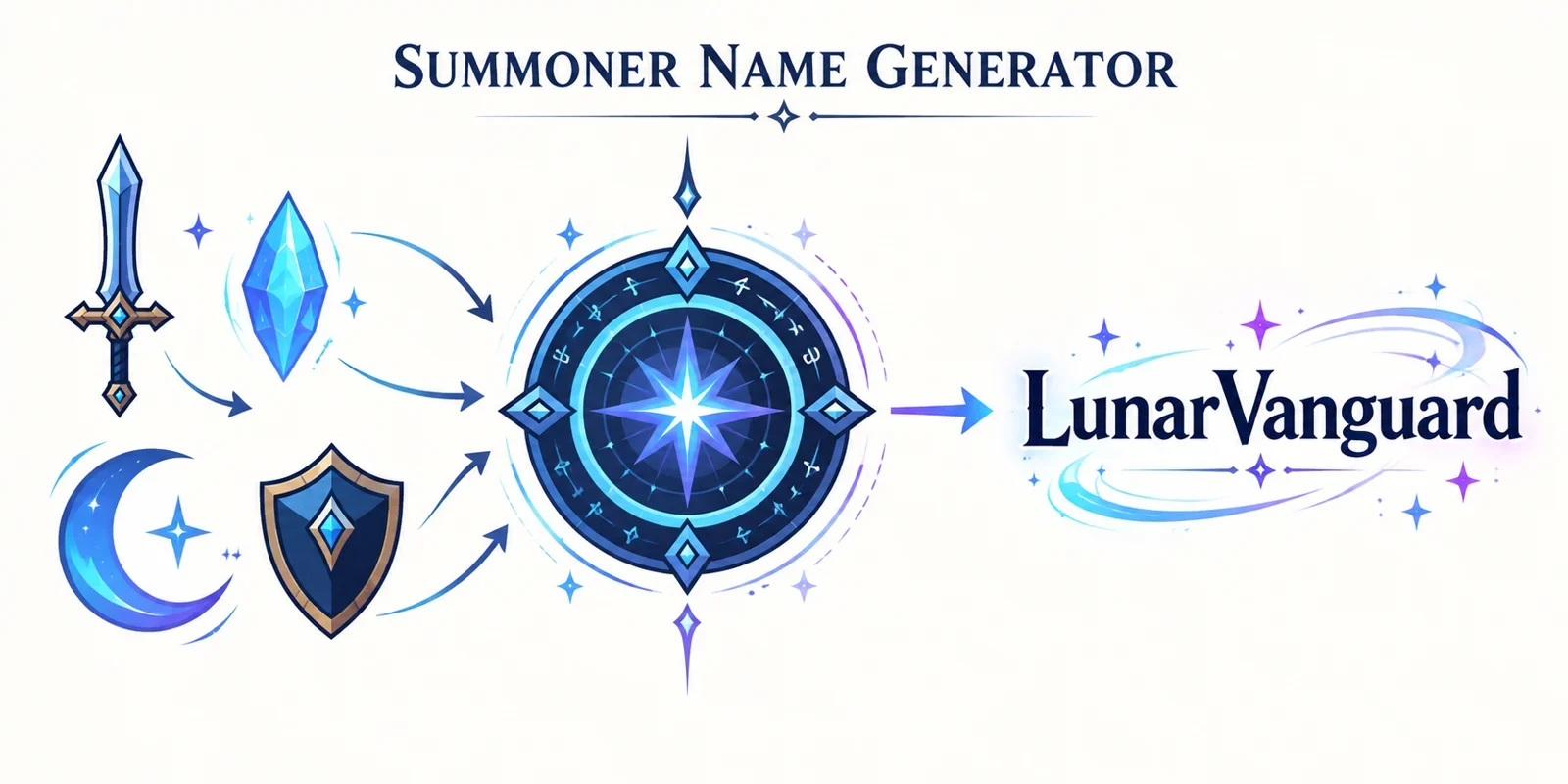
Finding a League of Legends name that feels personal, readable, and Rift-ready takes more than mashing two cool words together. A LoL summoner name generator can help by turning inputs such as role, champion main, style, length, numbers, and symbols into themed Riot ID candidates. The useful part is not blind copying but using generated ideas as a starting point. This guide explains how persona alignment works, which Riot ID formatting rules matter, how thematic lexicons shape outputs, how generators compare with manual brainstorming, and what players should check before committing to a name.
Understanding the LoL Name Generator: Algorithm and Persona Alignment
A LoL name generator is most useful when it behaves less like a random word blender and more like a persona-matching assistant. The strongest tools combine curated word pools with player inputs so the output feels tied to a role, champion, mood, or in-game identity. The goal is not to produce a name that is guaranteed to be available or universally funny; it is to generate a broad set of candidates that a player can refine.
How Inputs Shape the Output
A typical generator asks for style, length, number preference, and symbol preference. Style options may include Clever, Clean, Funny, Tryhard, Fantasy, and Dark. Length may be short, medium, or long. Numbers may be off, subtle, random, or year-like. Symbols may be off, safe, or decorated. These settings matter because they change how a name reads in chat, on scoreboards, and in search results. A short Clean name with subtle numbers feels very different from a long Fantasy name with decorated symbols.
When a player enters a role or champion cue such as ‘AD carry’ or ‘Yasuo main’, the generator should map that input to a thematic lexicon rather than repeating the input literally. An AD carry cue might pull from precision, pressure, range, or late-game imagery. A Yasuo cue might pull from wind, blade, wanderer, or storm themes. A support cue might lean toward guard, vow, ward, or utility. The exact mapping depends on the tool, but the principle is consistent: inputs act as signals, and the lexicon supplies the vocabulary.
Quality Scores and Candidate Filtering
Some generators display heuristic scores for generated names. For example, a sample candidate might be rated 97/100 with notes such as easy length, clean characters, and subtle numbers. That kind of score is best treated as a readability filter, not as proof of in-game availability or Riot approval. A high score can help a player notice names that are easy to type and remember, while a low score can flag awkward casing, excessive symbols, or hard-to-read combinations.
Persona Alignment in Practice
Persona alignment means the name should sound like it belongs to the player’s chosen identity. A Tryhard top laner may want a name that sounds composed and threatening. A Funny support main may prefer something self-aware or playful. A Fantasy mid laner may want a name that sounds like a title or faction. The generator does not need to understand the player deeply; it needs to offer enough style variation that the player can recognize the right direction.
Good use of a generator is iterative. Start with a role or champion cue, generate a batch, shortlist names that sound natural when read aloud, then adjust length, numbers, or symbols. If a name feels too generic, switch the style. If it feels too forced, remove decorative characters. The best results usually come from combining one generated element with one personal element, such as a favorite word, a subtle number, or a tag that fits the player’s region or friend group.
Procedural Syntax & Formatting Constraints for LoL Names
Before a generated name becomes a Riot ID, it has to survive formatting rules. Riot ID uses a game name plus a tag line, usually written with a hash separator such as Name#TAG. The full Riot ID is the identity players see and share. Because exact character limits, tag lengths, and allowed symbols can change, players should verify current rules through Riot’s official support pages or the League client rather than assuming a fixed number.
What the Generator Must Respect
A compliant generator should treat formatting as a hard filter, not an afterthought. It should avoid producing empty names, trim accidental spaces, reject disallowed punctuation, keep the game name within the current limit, and produce a tag line that matches current rules. It should also avoid relying on characters that look similar, such as a letter and a number that can be confused in chat. Readability matters because teammates may need to type the name, search for it, or mention it in a report.
Casing deserves attention as well. A name may look stylish in mixed case, but players should avoid names that depend on case alone to be distinct. If two candidates differ only by capitalization, they may be confusing in conversation. A generator can help by offering clean casing patterns, such as title case, all lowercase, or a single stylized break, but the final choice should still be checked in the client.
The Tag Line’s Role
Riot ID uniqueness is tied to the full game name and tag combination, not the game name alone. That is why a desired game name may still be usable with a different tag line. However, this is not a guarantee. The combination must be available, the name must not be restricted, and the player must follow current Riot rules. A generator should therefore never promise that a name is claimable. It should present candidates and remind the player to verify availability.
Numbers, Symbols, and Decorative Characters
Numbers and symbols are aesthetic choices, but they also affect readability. A subtle number can help separate similar names, while random numbers can make a name feel disposable. Safe symbols may add personality, but decorated characters can be hard to type, may be restricted, or may render inconsistently across platforms. The generator settings should let players turn numbers and symbols off entirely, use a subtle option, or choose a more decorated style. The final name should still be readable when spoken aloud and easy to search.
Why Current Rules Matter
Old summoner-name assumptions do not always map cleanly to Riot ID behavior. Players should not rely on outdated guides for exact limits or tag rules. The safer approach is to use the generator for ideation, then confirm the current constraints through official Riot channels or the client before making a change. If a candidate fails a formatting check, adjust the length, remove the symbol, or simplify the tag rather than forcing an unreadable workaround.
Contextual Heuristics & Lexicons: Thematic Keywords for Roles, Champions, and Humor
The personality of a name generator comes from its lexicons: the themed word pools used to build prefixes, suffixes, and full names. A strong lexicon is not just a list of cool words. It is organized by role, champion theme, tone, and readability so the output feels varied without becoming incoherent.
Role-Based Lexicons
Role-based pools give players names that sound connected to how they play. A top-lane lexicon might lean toward steel, duel, bruiser, wall, or pressure. A jungle lexicon might use hunt, path, gank, wild, or tempo. A mid-lane lexicon might use spark, rune, burst, roam, or control. A bot-lane lexicon might use aim, shot, pace, carry, or late. A support lexicon might use guard, vow, ward, peel, or utility. These are not fixed lists; they are examples of the kinds of semantic clusters a generator can use. The better tools avoid making every role name sound identical.
Champion-Inspired Lexicons
Champion-inspired names can be evocative when they use themes rather than direct copies. A wind-themed champion cue might suggest gust, sweep, wander, or blade. A light-themed champion cue might suggest prism, glow, beam, or radiance. A chain-themed champion cue might suggest link, pull, soul, or lock. These themes let a player signal a main without using a plain name such as ChampionName123. The tradeoff is longevity. A champion-specific name can feel dated if the player changes mains or if the champion falls out of favor. Playstyle-based names usually age better because they describe a broader identity.
Humor and Meme Lexicons
Humor lexicons are popular because they make a name memorable, but they carry social risk. Self-deprecating terms, exaggerated failure jokes, or irony-heavy names can be funny to a friend group and annoying to random teammates. A generator can offer humor styles such as dry, chaotic, deadpan, or tryhard-parody, but players should consider how the name reads in a tense match. Names that imply feeding, rage, or giving up can create a negative first impression even when the player means them as a joke.
Combining Lexicons Without Losing Readability
The best combinations usually pair one strong thematic word with one simple modifier. A role prefix plus a humor suffix can create a name that feels playful but still readable. A champion theme plus a clean noun can feel like a title. A fantasy word plus a subtle number can feel like a long-term identity. The generator should avoid stacking too many modifiers, because long chains of themed words become hard to parse. A useful rule is that the name should be understandable at a glance and easy to type without guessing.
Matching Tone to Player Intent
A player who wants a competitive identity may prefer clean, short, confident lexicons. A player who wants a stream persona may prefer names that are distinctive and easy to say. A player who wants a joke name may prioritize surprise over permanence. The generator does not need to decide which is best; it needs to offer enough thematic range that the player can compare candidates across tones. The final choice should balance theme, readability, and how comfortable the player feels seeing the name after many matches.
Comparative Analytics: Generator vs. Manual Ideation
A generator and manual brainstorming solve different parts of the naming problem. A generator is fast and broad; manual ideation is slower but more personal. The table below compares them across the factors players usually care about.
| Factor | Generator | Manual Ideation |
|---|---|---|
| Uniqueness | Moderate to high: combinations can be fresh, but popular inputs may produce similar patterns. | High potential: a player can craft a fully original concept, though it may still be taken. |
| Availability | Not guaranteed: most generators do not check live Riot ID availability. | Not guaranteed: the player must check manually in the client or through official tools. |
| Speed | Fast: dozens of candidates can be reviewed in a short session. | Slow: can take hours or days to settle on a name. |
| Meta-relevance | Varies: depends on the lexicon and whether it reflects current roles or champion themes. | Depends on the player’s awareness of the meta and personal playstyle. |
| Customization | Limited by the generator’s word pools and settings. | Unlimited: the player can invent any concept that follows Riot rules. |
| Readability control | Strong if the tool scores length, characters, and symbol use. | Depends on the player’s editing discipline. |
| Brand safety | Mixed: generated humor or edgy styles may create moderation or reputation risk. | Stronger if the player deliberately avoids offensive, trademarked, or confusing terms. |
Which Approach Fits Which Player
A generator is a strong starting point for players who want a quick batch of role-based or champion-inspired ideas. It is also useful for breaking creative block. Manual ideation is better when the name needs to support a long-term identity, such as a streamer brand or an esports persona. In practice, the best workflow is hybrid: generate a shortlist, read each name aloud, remove anything hard to type, then manually refine the strongest candidates.
Longevity and Champion-Specific Risk
Champion-specific names can look dated if the player changes mains or if the champion’s popularity shifts. Playstyle-based names tend to survive patch changes because they describe a broader approach rather than a single character. That does not make champion names bad; it simply means players should ask whether the name is meant to be a temporary joke, a season-long identity, or a long-term brand. A name that references a mechanic or theme can age better than a direct champion name.
Streamer, Esports, and Commercial Considerations
For streamers and competitive players, the name is part of the brand. Shorter, readable names are easier to say, search, and remember. Players should avoid names that imitate another brand, suggest official endorsement, or rely on offensive humor. Availability is only one check; moderation rules, trademark risk, and audience perception are separate concerns. A generated name can be a useful seed, but a public-facing name deserves manual review before it is used commercially.
Frequently Asked Questions: Riot ID Changes and Availability
How does the Riot ID migration change the way players should think about summoner name availability?
Riot ID shifted the focus from a single summoner name to a game name plus tag line. That means players should think about the full Riot ID combination rather than only the game name. A desired game name may be usable with a different tag, but the full combination still has to be available and compliant with current Riot rules. Players should verify through the client or Riot’s official support information rather than relying on old summoner-name assumptions.
What should players verify about Riot ID character and tag-length constraints?
Exact character limits, allowed symbols, casing behavior, and tag-length rules can change, so players should confirm current requirements through Riot’s official support pages or the League client. A generator should be treated as an ideation tool, not an authority on current formatting rules. Before committing, check the game name length, tag format, and whether any punctuation or decorative character is accepted.
Can a player claim a formerly used summoner name by picking a fresh tag line?
Sometimes, in principle, if the full Riot ID combination is available and the name is not restricted. A fresh tag can separate a player from someone using the same game name, but it is not automatic. The name may still be held by another account, reserved, blocked, or subject to moderation rules. Players should check the exact combination in the client and use official tools where appropriate.
Are generated names guaranteed to be available in-game, and what checks should players run before use?
No. Generated names are candidates, not reservations. Most generators do not query live Riot ID availability. Before using a name, players should attempt the change in the League client or check official Riot support guidance. A technical check is available through Riot’s account endpoint /riot/account/v1/accounts/by-riot-id/{gameName}/{tagLine}, which returns a PUUID for a Riot ID and can help confirm whether an account exists for that identifier. Even then, players should treat the result as a verification aid, not a guarantee that the name can be claimed. If a candidate is unavailable, adjust the tag, simplify the spelling, or choose a different generated option.