On this page
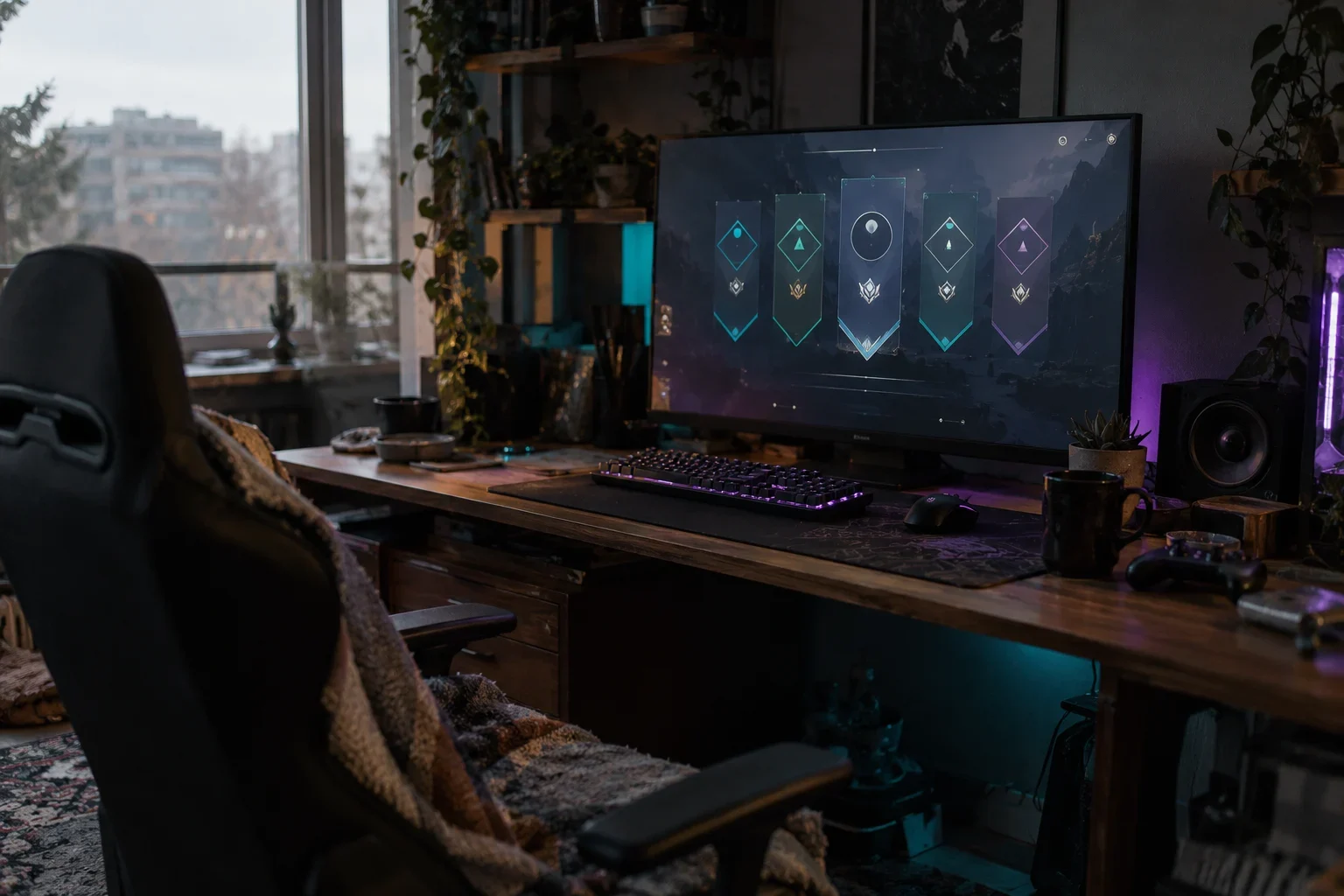
Sweaty gamer tags are not just random strings. They signal ranked intent: a player who studies rotations, warms up before queue, and wants a name that looks sharp in a kill feed. This generator concept centers on FPS and battle-royale identities, with Sweaty as a primary style preset, symbol insertion, clan-ready prefixes, and short tryhard syntax. The page should help players explore ideas quickly while keeping platform rules and availability checks visible, because a tag that looks perfect in a generator still needs to fit the target game or service.
Ranked-Grind Persona and Sweaty Tag Semantics
Ranked-grind players use a tag as a calling card. In FPS and battle-royale communities, a sweaty tag is usually read as a signal of intent: the player cares about rank, warm-up routines, map knowledge, and clean execution. The visual language is compact rather than decorative. Short lowercase words, x used as a vowel, itz and iam prefixes, and crisp consonant endings can make a name look like it belongs in a high-rank lobby. The same logic applies to tryhard syntax: the tag should be easy to scan in a kill feed, easy to call out in voice chat, and distinct enough to avoid blending into a lobby list.
The generator should treat Sweaty as a primary style preset, not an afterthought. A style selector can also include Cool, Funny, Cute, Edgy, and Aesthetic, but Sweaty should shape the word banks toward ranked, clutch, zone, rush, and frag vocabulary. The persona is not simply angry or edgy; it is focused. Good sweaty tags suggest preparation and pressure. They may use a clan prefix, a symbol accent, or a lowercase remix, but they should not become so cluttered that the core name disappears. The page copy should explain that a sweaty tag is a blend of ranked-grind semantics, readable casing, and a small number of visual cues. That framing helps players choose a tag that feels intentional rather than random.
Symbol, Casing, and Length Constraints
Symbol, casing, and length rules are the practical guardrails for a sweaty tag. The generator can offer symbol insertion across results, using a palette of 30 symbols and four placements such as prefix, suffix, inner separator, and wrapper. That flexibility is useful, but the page should recommend restraint. One symbol accent often reads as sharper than three. Common-looking marks such as ×, 亗, 々, 〆, ツ, and 彡 can create a competitive feel, yet support varies by platform, game, and name field. The page should tell players to preview the exact character in the target service before committing.
Casing is another signal. Lowercase styling is common in tryhard tags because it looks compact and understated, while uppercase is often reserved for clan tags or short prefixes. The generator should not force one casing rule; it should let players preview lowercase, uppercase, and mixed-case remixes. Length is equally important. Selecting a platform should apply a practical length limit, and suggestions should remain compact enough for kill feeds and lobby lists. Because platform rules change and differ, the page should avoid promising one universal limit. Instead, it should provide a platform selector and direct users to the official name-change or support page for the final check. The copy should also note that symbols may be rejected, rendered as boxes, or stripped by a game even when they work elsewhere. That verification step protects players from choosing a tag that only looks correct in the generator.
Clan-Ready Prefixes and Short Tryhard Syntax
Clan-ready prefixes and short tryhard syntax make a tag feel like part of a squad identity. A clan tag can sit at the front, such as a short group marker before the main name, or at the end as a compact suffix. The generator can produce clan and squad names as well as clan tags with the clan name they came from, which helps players keep a consistent identity across a roster. Prefix patterns such as itz, iam, x, vx, and ex are familiar in FPS naming, while suffixes like x, z, q, ace, core, and main can close a tag with a sharp edge. These are patterns, not guarantees; the page should present them as style options and remind users to check the target platform.
Short tryhard syntax works best when it has one clear core. A two- or three-syllable word, one modifier, and no unnecessary spaces usually reads faster than a long phrase. Examples such as itzVex, xNova, CLANxRush, or FragCore show the shape without promising availability. The generator should let players choose a clan prefix, a symbol wrapper, or a lowercase remix, then keep the result short enough for a kill feed. It should also avoid stacking too many cues at once: a clan prefix, two symbols, and a long suffix can turn a sharp tag into visual noise. The strongest clan-ready tags look deliberate at a glance. They tell teammates who you run with and tell opponents that the name is built for ranked pressure.
Interactive Widget UX and Client-Side Generation
The above-the-fold widget should be the first thing a visitor sees. It opens with an H1 such as Sweaty Gamer Tag Generator, a one-sentence subtitle that promises ranked-grind and symbol-ready ideas, and four niche tag pills: Gaming, Ranked, Symbol, and Clan. A count selector for 5, 10, or 20 results sits beside a large trigger button labeled Generate Sweaty Gamer Tags. The result area should use cards rather than a plain list, with each card showing the generated tag and instant Copy and Favorite actions. Copy should use the clipboard, and Favorite should persist in localStorage so players can compare shortlists without creating an account.
The client-side generation model should stay simple and fast. The page can embed vanilla JavaScript arrays with at least 20 theme-specific prefixes and suffixes, then combine them with the selected style, game, platform, and optional starting word. A starting word or nickname lets the generator remix names around a personal signal instead of producing only generic combinations. A batch of 12 nickname ideas per generation supports quick review without overwhelming the user. Processing should run in the browser without AI requests or credits, which keeps the interaction immediate and private. The UI should also include a small note that generated names are ideas, not reservations. A platform selector can apply a practical length limit and a symbol toggle can show or hide decorated variants. The widget should never require a page reload; every generation, copy, and favorite action should feel instant.
Lexicon and Thematic Word Banks
Lexicon design should separate the core signal from the decoration. For FPS and battle-royale tags, ranked vocabulary includes words like rank, grind, climb, zone, rotate, clutch, sweat, try, main, and push. Tactical nouns such as frag, rush, apex, drop, lobby, and squad add a game-aware edge. Speed and impact words like quick, sharp, flash, strike, and pressure work well as short suffixes. Clan vocabulary should stay compact: squad, clan, crew, pack, unit, and team can sit in a prefix or suffix without taking over the tag. The generator should combine these banks by game, style, and platform settings rather than mixing every word at random.
Prefix examples can include itz, iam, x, vx, ex, re, zy, ky, no, pro, rank, sweat, try, clutch, apex, zone, rush, frag, lob, and win. Suffix examples can include x, z, q, v, r, k, ace, ion, core, play, main, mode, god, pro, elite, squad, clan, op, tt, and gg. Symbol wrappers should be optional and clearly marked as platform-dependent; common candidates include ×, 亗, 々, 〆, ツ, and 彡. The page should avoid presenting one symbol set as universally safe. Instead, it can group symbols by visual weight and let users test a single accent. A good lexicon gives players enough variety to find a ranked-grind identity without making every result look like the same formula.
Comparative Analytics and Authority Content
Comparative analytics help the page earn authority without turning into a tutorial. The table below compares generator-assisted ideation with manual brainstorming across the criteria that matter most to sweaty tag seekers: uniqueness, availability, semantic relevance, and generation speed. The point is not to claim that one method wins everywhere. It is to show where a generator helps and where the player still needs to verify.
| Criterion | Generator-assisted ideation | Manual ideation | Practical reading |
|---|---|---|---|
| Uniqueness | Combines curated word banks, style presets, and optional symbols to produce many variants | Depends on memory and outside references; can repeat familiar patterns | More combinations widen the search, but duplicates still need checking |
| Availability | Does not reserve or confirm names; produces ideas only | Same limitation; the player still checks the platform | Neither method guarantees availability |
| Semantic relevance | Sweaty, Ranked, and Clan settings keep FPS and battle-royale cues in view | Can be highly personal but may drift into unrelated styles | Style presets help maintain a ranked-grind read |
| Generation speed | Produces a batch in the browser without page reloads | Slower for large shortlists | Useful for quick comparison, not a replacement for judgment |
The surrounding authority copy should explain the ranked-grind persona, symbol and casing constraints, clan-ready prefixes, and the verification step. It should also state that platform-specific symbol rules and availability are user verification items. That keeps the page useful as a planning tool while avoiding false promises. A comparison table is strongest when it is honest about the limits of automation and clear about the decisions the player still owns.
FAQ Schema and High-Intent Questions
What makes a gamertag look sweaty?
A sweaty tag usually looks compact, intentional, and ranked-focused. Lowercase styling, x used as a vowel, itz or iam prefixes, short crisp words, and one symbol accent can all contribute. The tag should still be readable in a kill feed and easy to call out in voice chat.
How do I add symbols to a sweaty gamertag?
Use the generator’s symbol insertion options to test a small set of marks in prefix, suffix, inner, or wrapper positions. A palette of 30 symbols and four placements gives plenty of variety, but one accent is often enough. Check the target platform because some services reject, strip, or misrender symbols.
Can I use clan tags and clan-ready prefixes in my gamertag?
Yes, as a style direction. Clan tags can sit at the start or end of a name, and clan-ready prefixes such as itz, iam, or x can create a squad identity. The generator can also produce clan and squad names with matching clan tags. Confirm the game or platform’s naming rules before you commit.
Are generated sweaty gamertags guaranteed to be available?
No. A generator creates ideas; it does not reserve names. Availability depends on the platform, the exact character set, and current naming rules. Use the official name-change or support page for the final availability check. The same caution applies to symbol support and length limits.