Table of Contents
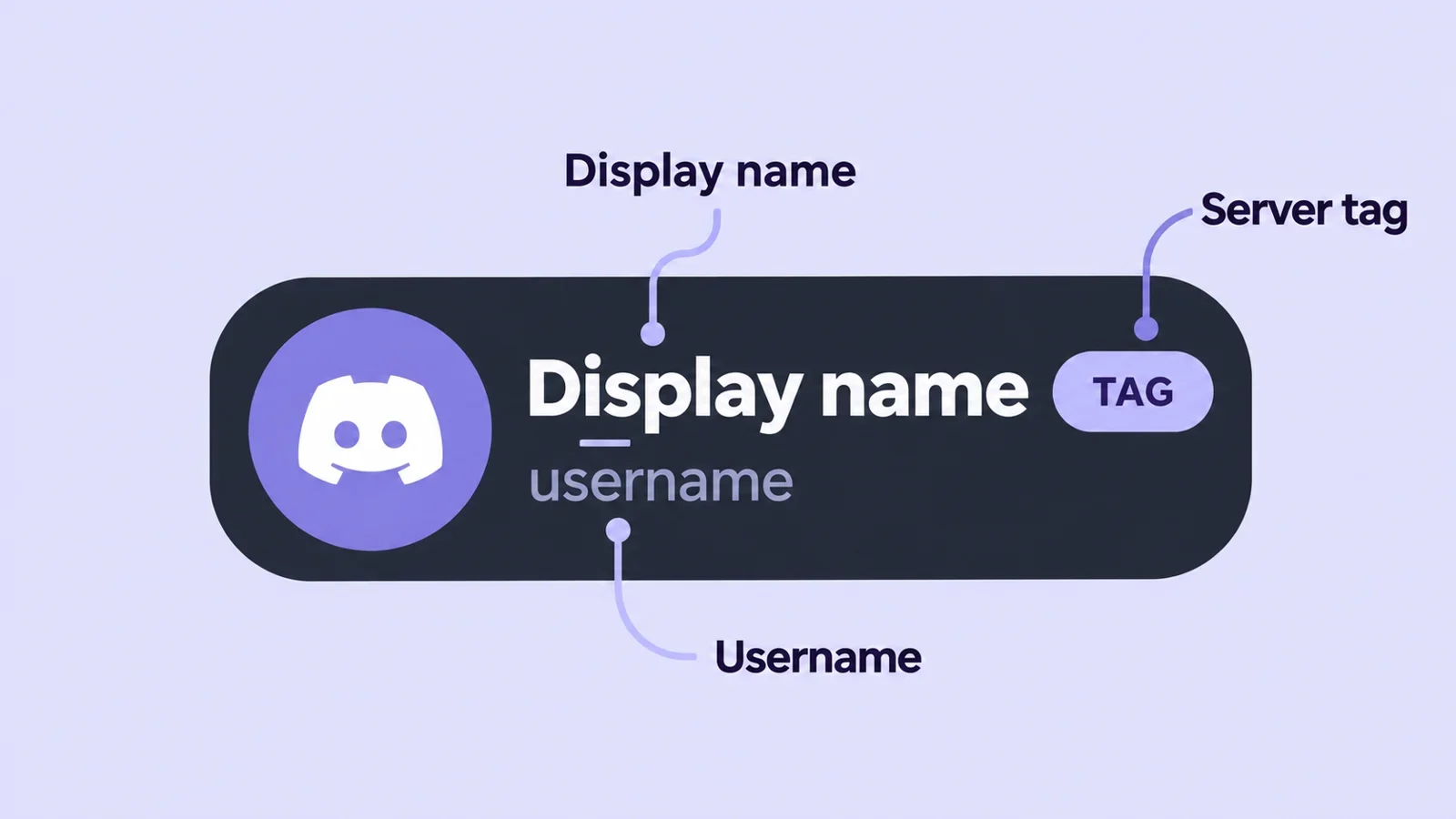
Discord naming works best when you separate the account username, the display name, and the server tag. The Discord Tag Generator focuses on readable username and display-name ideas by combining themed word parts into lowercase-safe handles, while helping you plan the separate community tag layer. It is a brainstorming tool, not an availability checker: every candidate still needs to be verified on Discord.
Use it to explore gamer, meme, aesthetic, and creative styles without drifting into unreadable leetspeak or misleading suffixes. The sections below explain the generator’s construction habits, the word pools, the trade-offs between generated and manual ideas, and the suffix habits that make a tag easy to say, type, and remember. Where platform rules matter, confirm the current details in Discord’s official help resources.
Understanding the Discord Tag Generator
The generator is built around a simple formula: prefix + core + optional suffix, with an optional number only when the selected style calls for it. A gamer preset might pull from dark, storm, blade, and _zz; an aesthetic preset might combine luna, velvet, dusk, and a period separator; meme and creative presets use their own pools. The result is a shortlist of readable candidates, not a promise that any name is free.
Persona alignment matters. Gamer styles lean toward compact compounds and familiar wrappers, meme styles favor playful or absurd pairings, aesthetic styles use soft separators and natural nouns, and creative styles point to making, writing, and world-building. The tool also supports a seed: the same style and seed reproduce the same batch, so you can revisit a set or share it with friends.
Three identifiers are often confused. The username is the account handle. The display name is a separate profile label that can differ from the handle. The server tag is a profile-level community label managed separately from the username. Generating a username idea does not create a server tag, and selecting a server tag does not change your username. Check Discord’s official help pages for the current rules that apply to each layer.
Procedural Syntax & Formatting Constraints
Exact character and length rules are controlled by Discord and can change, so confirm the current details in official help resources before you commit. The generator’s job is to keep candidates in a readable, lowercase-safe shape: letters, digits, periods, and underscores, with no spaces or fancy Unicode font substitutions. That is a tool design choice, not a substitute for the platform’s rulebook.
Because Discord displays usernames in lowercase, internal capitals disappear. DarkKnight becomes darkknight and loses the visible word boundary; a period or underscore can restore it as dark.knight or dark_knight. Leetspeak can dodge a taken-looking name, but swaps such as ph4nt0m can break lowercase compatibility and pronounceability. Use it sparingly, if at all.
Suffixes affect formatting. Wrappers such as xX and endings such as -zz or -chan add flavor, but remember that the displayed handle is lowercase: xXDragonXx reads as xxdragonxx. An optional number can help a shortlist, but a random trailing-digit fallback usually looks lazy and is harder to remember. Server tags have their own platform limits; do not assume username syntax carries over. Keep server-tag ideas plain, short, and easy to repeat, and verify the current character rules officially.
Contextual Heuristics & Lexicons
Pools are grouped by vibe. Gaming lexemes include shadow, wolf, blade, storm, cyber, hunter, and reaper, with suffixes like _zz and Xx. Meme lexemes include dank, potato, llama, troll, and sus, with playful endings. Aesthetic lexemes include luna, nova, velvet, mist, pearl, dusk, and willow, usually separated by periods or underscores. Creative lexemes include ink, quill, pixel, story, dream, weaver, forge, and scribe.
Two construction rules keep output usable. First, compound unrelated words – ironpetal or deadchannel – because they are pronounceable and less likely to collide with a common single word. Second, make only a small alteration when a base word is taken: phantom to fantom or echo to ekko keeps the shape and sound. Three substitutions, or heavy leetspeak such as ph4nt0m, usually make the tag unspellable and can break the lowercase-first feel.
Prefix-noun and initial-word patterns are also useful. A prefix can set tone while the noun keeps meaning; an initial-word pattern compresses a phrase into something short enough for a tag. The goal is not maximum weirdness. It is a name that a new friend can repeat after hearing it once. If a candidate fails that voice-chat test, drop it and try a cleaner combination.
Comparative Analytics: Generator vs. Manual Ideation
Generated names are not checked against Discord’s live registry. Manual ideation does not guarantee availability either. The honest comparison is about workflow, not magic.
| Factor | Generator | Manual ideation |
|---|---|---|
| Uniqueness | Produces many uncommon combinations, but no guaranteed uniqueness. | Can target a personal story, but still no guarantee. |
| Availability | Fast shortlist; you must check each candidate on Discord. | Slower; you can adjust as you search. |
| Speed | Seconds to a batch. | Minutes to hours, depending on creative blocks. |
| Suitability | Strong for style prompts and persona buckets. | Stronger for niche meaning and inside references. |
| Discord/other platforms | Good for readable Discord-style lowercase shapes; check each platform’s rules elsewhere. | Portable if you design it deliberately. |
Manual pros: full control and personal meaning. Generator pros: speed, variety, and examples you would not have considered. A sensible workflow is to generate 5-10 candidates, remove unreadable ones, and verify the survivors on Discord. Neither method can promise that a name or server tag is available.
Frequently Asked Questions
Can I use symbols in a Discord tag?
The generator keeps safe output to plain letters, digits, periods, and underscores; it does not rely on emoji or fancy Unicode font letters in readable tag shapes. Symbol rules are platform-controlled, so verify the current allowed set in Discord’s official help resources before committing.
Are Discord tags unique, and does the generator guarantee availability?
No. The generator creates ideas and readable shapes; it cannot check Discord’s live registry or promise uniqueness. Treat every output as a shortlist and verify availability in the platform itself.
How do server tags work on a profile?
Members can show one server tag at a time via User Settings -> Profiles -> Server Tag on desktop, or Edit Profile -> Server Tags on mobile, subject to a rate limit. If a tag stops showing, first confirm it is still selected and whether a recent change is subject to that limit. If it remains missing, use Discord’s official help resources.
What suffix styles should I avoid?
Avoid suffixes that imply a platform or status you do not have. Avoid time-stamped references such as birth year, age, school year, or current game, because they expire. Avoid trailing random digits as a default fallback and avoid multiple substituted letters that make the name a puzzle. Test the result by asking whether someone could hear it in voice chat and type it correctly afterward.
Suffix & Symbol Styling That Works
Suffix and symbol choices should make a tag easier to read, not harder. Safe patterns include period separators (luna.nova), underscore separators (moon_walker), short endings such as -chan or -zz, and restrained wrappers. The test is simple: can someone hear the tag in voice chat and type it correctly afterward? If not, the tag is costing connections.
Avoid trailing random digits such as gamer1234. They read as a fallback and are hard to recall. Avoid multiple substituted letters, because the name becomes a puzzle. Avoid time-stamped references – birth year, age, school year, or current game – because they expire and make a handle feel dated. Also skip suffixes that pretend to be a platform badge or creator status you do not actually have; a neutral ending is more honest and more durable.
Server tags need extra discipline. Keep them plain and easy to repeat; do not rely on fancy font substitutions or emoji as a readability shortcut. For profile usernames, periods and underscores are the useful symbol separators. Because displayed handles are lowercase, wrappers can lose their visual symmetry; xxblazexx is clearer than a mixed-case wrapper that collapses. Readable examples: velvet.nova, pearl_dusk, xxblazexx, ink_weaver, moon_walker. Each keeps a visible core word and a separator that does not require explanation. Verify current platform rules before finalizing.
Profile vs. Community Tag Use Cases
Your username is the long-term identity. It appears next to your messages across servers and direct messages, so it should survive a change in game, friend group, or aesthetic. A display name can be more temporary, and a server tag is the most contextual layer: a community label that sits separately from the account handle.
Members can show one server tag at a time. On desktop, the path is User Settings -> Profiles -> Server Tag; on mobile, Edit Profile -> Server Tags. Changes are subject to a rate limit, so rapid switching is not a good plan.
Before server tags, communities used nickname clan tags such as [NOG]Alex. Those can use symbols and fonts because they are part of the server nickname, but they only appear inside that server. They are not a replacement for the profile-level server tag. Use the generator to find a username that is readable and durable, then choose server tags per community. Do not force one short community label to carry your entire identity.